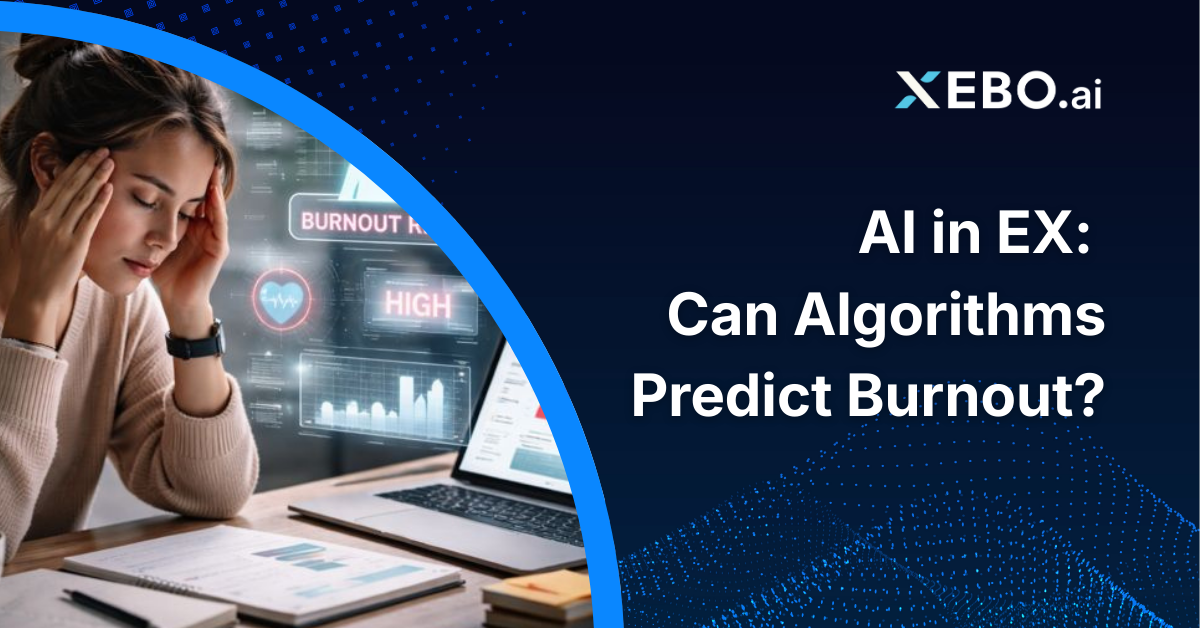
Burnout is no longer a fringe concern; it’s a full-blown crisis in modern workplaces. With back-to-back Teams calls, overflowing inboxes, and increasingly blurred boundaries between work and life, employees are experiencing chronic stress like never before. But what if technology, the very thing that often contributes to burnout, could also be the key to preventing it?
Welcome to the age of AI-powered employee experience (EX). Across industries, AI is revolutionizing how organizations listen to, analyze, and act on employee feedback. This evolution isn’t just about deploying smart employee survey software, it’s about harnessing advanced algorithms to detect early signs of disengagement, exhaustion, and emotional fatigue before they spiral into burnout.
Here’s how AI is reshaping the future of workplace well-being.
Burnout is more than just being tired. Defined by the World Health Organization as a syndrome resulting from chronic workplace stress that hasn’t been successfully managed, burnout manifests as emotional exhaustion, depersonalization, and a diminished sense of accomplishment.
Traditional HR metrics, like absenteeism, productivity, or turnover, only capture the aftermath. By the time these metrics spike, it's too late. What organizations need is real-time insight into how employees feel, not just how they perform.
Enter AI-powered Voice of Customer (VoC) platforms, once the domain of customer experience, that are now being repurposed to elevate employee experience. These platforms go beyond basic employee surveys. They apply natural language processing (NLP), machine learning, and sentiment analysis to decode feedback at scale and extract actionable insights.
At the heart of this transformation lies the employee feedback loop. Historically, companies conducted annual surveys using legacy tools. But those snapshots quickly grew outdated, often arriving too late to spark change.
Modern employee experience software flips the script. These tools are always on, collecting data through pulse surveys, open-text feedback, chatbots, and integrated collaboration platforms. AI then processes this data to spot emotional patterns and stress indicators.
For example:
Platforms like XEBO.ai are pushing the boundaries here, offering an intelligent feedback management platform that synthesizes multiple feedback channels, direct, indirect, inferred—to surface hidden employee issues before they escalate.
The true power of AI lies not in analysis but in prediction. Can algorithms truly foresee burnout?
Yes, and here’s how:
This isn’t science fiction. The best VoC platforms are already offering predictive dashboards that enable HR and business leaders to intervene proactively, whether that means initiating manager check-ins, redistributing workloads, or offering mental health resources.
Of course, with great data comes great responsibility. Predicting burnout means analyzing highly personal information. So how do organizations ensure this power isn’t misused?
Leading platforms implement:
Consider this real-world example:
A global tech firm deployed modern customer and employee experience software to monitor feedback across 10,000+ employees. The AI detected a rising trend of negative sentiment among mid-level managers, clustered around terms like "overwhelmed," "invisible," and "unclear goals." Traditional HR hadn’t noticed the issue.
Acting on these insights, leadership-initiated skip-level check-ins and restructured internal communications. Within a quarter, eNPS scores rebounded, and attrition among managers dropped by 17%.
This is the kind of transformation AI unlocks, not reactive firefighting, but proactive listening.
As organizations seek to modernize their employee engagement strategies, the choice of platform matters. Here’s what to look for:
If you're looking for a powerful Qualtrics alternative or Medallia alternative that combines AI sophistication with usability and ethical design, it’s time to explore newer, more agile platforms like XEBO.ai.
The human + machine partnership
Can algorithms predict burnout? Yes, but prediction alone isn’t the solution. AI is a partner, not a panacea. The real magic happens when organizations combine the speed and precision of AI with the empathy and action of human leadership.
Burnout won’t vanish overnight. But with the right employee survey software and a feedback management platform that listens deeply and responds intelligently, businesses can create healthier, more resilient workplaces. Investing in AI for employee experience isn’t just good for morale, it’s a strategic imperative for talent retention, productivity, and growth in the AI era.
Ready to see how AI can transform your workplace? Schedule a free demo with XEBO.ai.