In a world where customer expectations evolve by the minute and employee engagement defines organizational resilience, emotional intelligence (EI) is no longer a “soft skill.” It's a strategic advantage. Emotional intelligence shapes how organizations connect, communicate, and create value for both their customers and employees.
But can machines, traditionally confined to data, logic, and algorithms, ever grasp emotions, understand human nuance, and respond with empathy?
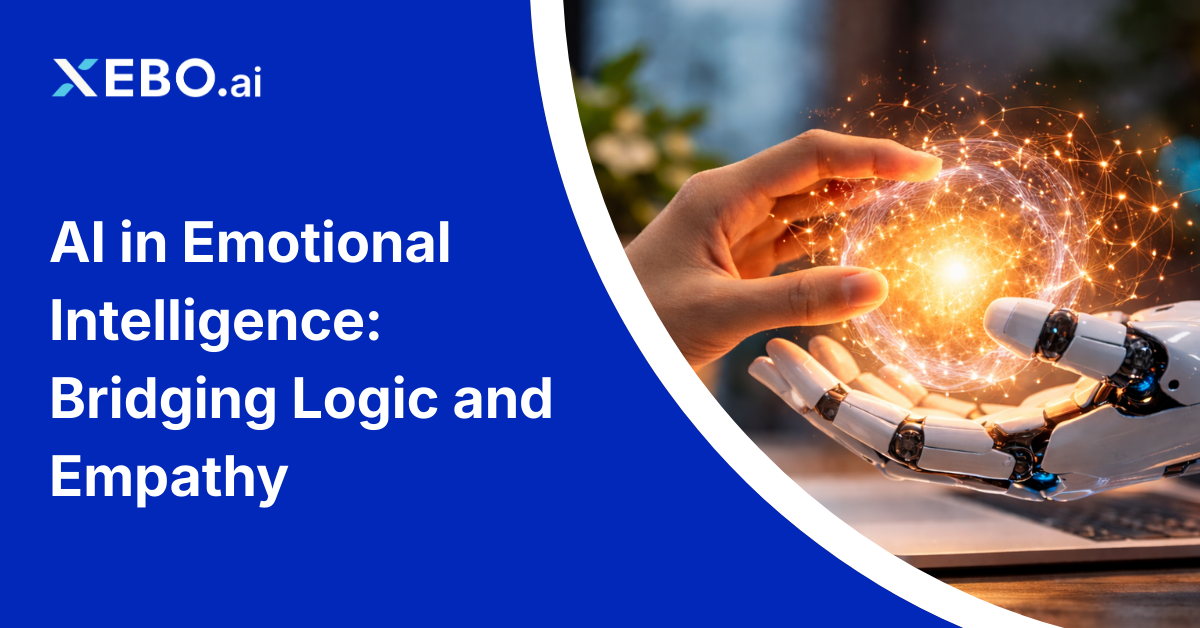
Thanks to the latest advancements in artificial intelligence, particularly within the best VoC platforms, this is no longer a futuristic dream. AI is not replacing human empathy but amplifying it. Let’s explore how emotional intelligence and AI are converging, and how this intersection is transforming customer experience, employee experience, and the survey intelligence landscape.
Artificial intelligence has traditionally excelled at analyzing data, spotting trends, and automating workflows. But with natural language processing, sentiment analysis, and machine learning advancements, AI is now making headway into more human-centric domains.
Emotionally intelligent AI systems can now detect tone, mood, and context in customer feedback, employee comments, social media posts, and survey responses. Using a VoC platform or employee survey software that integrates sentiment analytics allows businesses to extract emotional insights at scale.
This capability helps companies move beyond numeric scores and uncover the "why" behind customer dissatisfaction or employee disengagement. It's a level of feedback management previously unattainable with traditional survey management platforms or outdated voice of customer tools.
In the experience economy, emotions shape decisions. A customer may remain loyal to a brand not because of the product, but because of how that brand made them feel. Similarly, an employee might stay in a job because they feel heard, valued, and emotionally connected to the workplace culture.
Here’s where emotionally intelligent AI fits in:
Emotionally intelligent systems enable a proactive rather than reactive approach, empowering organizations to create experiences rooted in empathy.
Traditional feedback systems focused on metrics like NPS (Net Promoter Score), CSAT (Customer Satisfaction), or eNPS (Employee Net Promoter Score). While these metrics remain important, they only scratch the surface.
Emotionally intelligent AI enhances these systems in three ways:
The best NPS tools today go beyond “promoter” and “detractor” labels. They analyze open-text feedback for emotional cues like frustration, delight, confusion, or trust. This turns your survey management platform into an emotional radar.
By incorporating behavioral data (such as time spent on a support page or usage drop-off), AI can predict emotional states even before a customer submits feedback. This preemptive insight can trigger interventions and reduce churn.
In chatbots and digital assistants, emotionally intelligent AI adjusts tone based on the user's emotional state. A frustrated customer receives a different experience than a casual browser. This elevates the customer experience and boosts trust.
Forward-thinking organizations are already using AI-powered emotional intelligence to gain a competitive edge. Here’s how it manifests in practice:
This shift has also catalyzed the rise of Qualtrics alternatives and Medallia alternatives—more agile platforms that focus not just on collecting data, but understanding human emotion through it.
With great power comes great responsibility. Emotional intelligence in AI must be approached ethically. Just because we can detect emotional states doesn’t mean we should exploit them. Organizations must be transparent about how emotional data is used and ensure it's applied to enhance, not manipulate—the experience.
Moreover, emotional AI is not a replacement for human empathy. It is an augmentation. Humans remain the interpreters, decision-makers, and connectors. The role of AI is to amplify our capacity to understand and act on emotional insights across large-scale interactions.
Successful implementation depends on seamless collaboration between emotionally intelligent AI and emotionally intelligent humans. Together, they create experiences that are data-informed yet deeply human.
To operationalize AI-powered emotional intelligence, organizations need the right tools. The most effective platforms are those that unify logic (data processing) with empathy (emotional understanding).
When evaluating a VoC platform or employee survey software, look for:
These features help transform a survey management platform into a strategic feedback management platform that continuously improves customer and employee experience.
As AI continues to evolve, so will its capacity to understand and act on human emotions. We’re moving toward a future where feedback is not just about what’s said, but what’s felt. The next frontier of customer and employee experience will be defined by how well organizations listen, not just to voices, but to emotions.
By leveraging emotionally intelligent AI, brands will deliver experiences that are timely, relevant, and emotionally resonant. They will create cultures of empathy, both externally with customers and internally with employees.
This transformation marks a shift from transactional feedback to emotional connection, and it's already underway.
The intersection of artificial intelligence and emotional intelligence is redefining how we listen, understand, and respond in a digital-first world. Whether you're aiming to improve customer satisfaction or enhance employee engagement, emotionally intelligent AI is the catalyst for more meaningful experiences.
If you're seeking a Qualtrics alternative, a Medallia alternative, or simply the best VoC platform that truly bridges data with empathy, it’s time to take a closer look at how AI is shaping the future of feedback.
Schedule a free demo with XEBO.ai today, discover how emotionally intelligent AI can elevate your customer and employee experience.