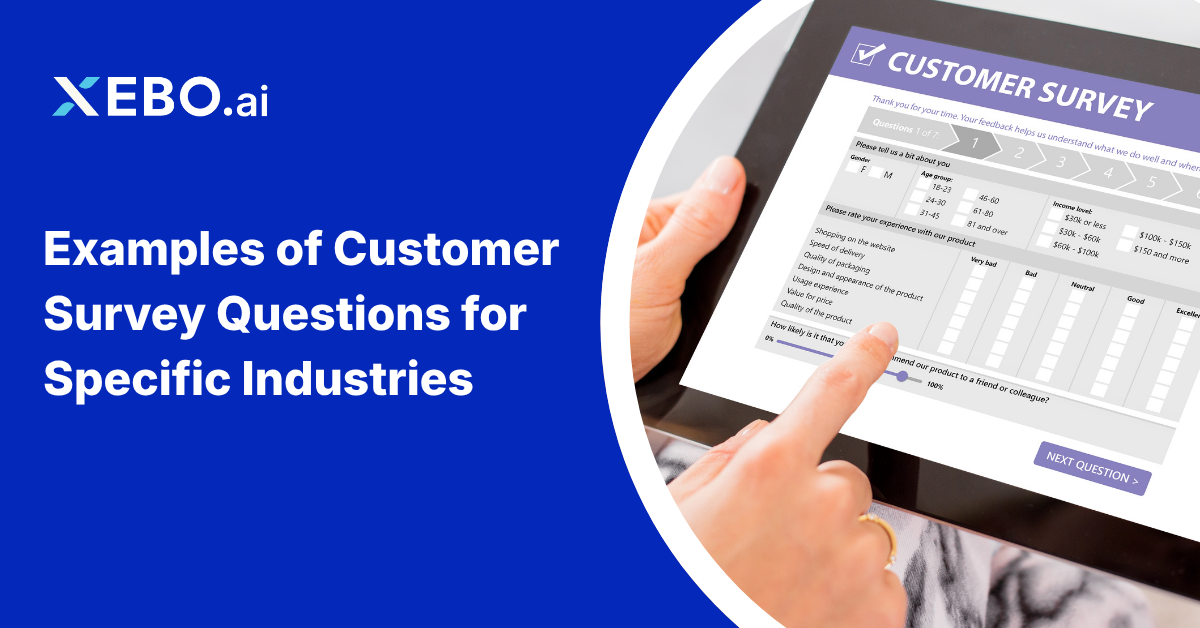
Customers don't just buy products, they choose experiences that match their expectations, habits, and preferences. Yet many businesses rely on assumptions instead of asking the right questions. The result? Missed opportunities, declining loyalty, and products or services that don't resonate with their audience.
The simplest way to eliminate guesswork is through well-designed customer preference surveys. By asking targeted questions, businesses can discover what customers value, how they make purchasing decisions, and what influences their satisfaction.
In this guide, you'll find practical examples of survey questions to understand customer preferences, learn why they matter, and explore how platforms like XEBO.ai help organizations turn customer responses into meaningful business decisions.
Customer preferences constantly evolve. What appealed to customers a year ago may no longer influence their buying decisions today. Preferences are shaped by changing lifestyles, technology, pricing, convenience, personalization, and customer experiences.
Businesses that actively collect customer preference data can:
Instead of making decisions based on intuition, organizations gain reliable insights backed by customer feedback.
A customer preference survey is a structured questionnaire designed to understand what customers like, dislike, expect, and prioritize when interacting with a brand.
These surveys help businesses answer questions such as:
The answers guide product development, marketing strategies, customer service improvements, and business growth.
When it comes to understanding customer preferences at scale, XEBO.ai offers an AI-powered experience management platform that goes far beyond traditional surveys.
With XEBO.ai, businesses can:
Instead of manually reviewing hundreds or thousands of responses, XEBO.ai helps businesses uncover patterns instantly, enabling faster and smarter decision-making.
The most effective surveys include a mix of question types. Here are practical examples you can customize for your business.
Understanding what customers want from your products helps improve offerings and prioritize future developments.
Examples include:
Pricing significantly influences buying decisions.
Ask questions like:
The buying experience often matters just as much as the product itself.
Examples include:
Customers appreciate brands that communicate the way they prefer.
Useful questions include:
Exceptional customer support creates loyal customers.
Consider asking:
Customer preferences are often influenced by how they perceive your brand.
Examples include:
Modern customers increasingly expect personalized experiences.
Ask questions such as:
Understanding future customer needs helps businesses stay ahead of changing market trends.
Examples include:
Even great questions can produce poor results if they're not written carefully. Follow these best practices:
Keep questions simple
Avoid technical jargon or complicated wording. Customers should understand each question immediately.
Ask one question at a time
Instead of asking:
"How satisfied are you with our pricing and customer service?"
Split it into two separate questions.
Use balanced answer choices
Offer neutral options alongside positive and negative responses to avoid bias.
Mix question types
Include rating scales, multiple-choice questions, ranking questions, and open-ended responses to gather both quantitative and qualitative insights.
Keep surveys short
Surveys with 8–15 focused questions typically achieve higher completion rates than lengthy questionnaires.
Focus on actionable insights
Every question should provide information that helps improve products, services, or customer experiences.
Many surveys fail because they include questions that don't produce useful insights.
Avoid:
The goal is to make surveys easy for customers and valuable for your business.
Artificial intelligence is transforming customer feedback analysis.
Instead of manually reviewing responses, AI can:
This allows businesses to move from simply collecting feedback to making faster, data-driven decisions.
Customer preferences influence every stage of the customer journey—from product discovery to repeat purchases. Businesses that consistently ask the right questions gain a competitive advantage by understanding what customers truly value.
Whether you're improving products, refining marketing strategies, or enhancing customer experiences, a well-designed customer preference survey provides the insights needed to make confident decisions. Using an AI-powered platform like XEBO.ai makes the entire process faster, smarter, and more actionable by transforming customer feedback into meaningful business intelligence.
Ready to Understand What Your Customers Really Want?
Stop relying on assumptions and start making decisions backed by real customer insights. Schedule a free demo with XEBO.ai to discover how AI-powered surveys, automated analytics, and actionable insights can help you better understand customer preferences and deliver exceptional experiences.
What are customer preference survey questions?
Customer preference survey questions are designed to understand what customers like, dislike, expect, and prioritize when choosing products, services, or brands.
Why are customer preference surveys important?
They help businesses improve products, personalize customer experiences, optimize pricing, strengthen marketing strategies, and increase customer loyalty through data-driven decisions.
How many questions should a customer preference survey include?
For the best response rates, most customer preference surveys should include 8 to 15 focused questions that can be completed in less than five minutes.
What types of questions should be included in a customer preference survey?
A balanced survey typically includes multiple-choice questions, rating scale questions, ranking questions, Likert scale questions, and open-ended questions to gather both quantitative and qualitative feedback.
How often should businesses conduct customer preference surveys?
Many organizations conduct customer preference surveys quarterly or biannually, while others collect feedback after major purchases, product launches, or significant customer interactions.
How does XEBO.ai improve customer preference surveys?
XEBO.ai uses artificial intelligence to help businesses create surveys, distribute them across multiple channels, analyze responses in real time, detect customer sentiment, identify trends, and generate actionable insights that drive better business decisions.